
The Programme
A six-week program built around curiosity, challenge, shared experience and care.
Opening
Staying sane in our modern world can be challenging.
As a remedy, we spend a lot of time talking about getting people into nature, but simply being near nature isn’t always enough to forge a relationship with it. We’re all different, and some of us work better by taking an active part in it.
I grew up around trees, but I never really saw them. That came later, through the daily experience of working with them. When I first began climbing, I loved the physical side of it — getting stronger, climbing bigger and taller trees, learning how to move through a canopy. But the tree itself was almost secondary.
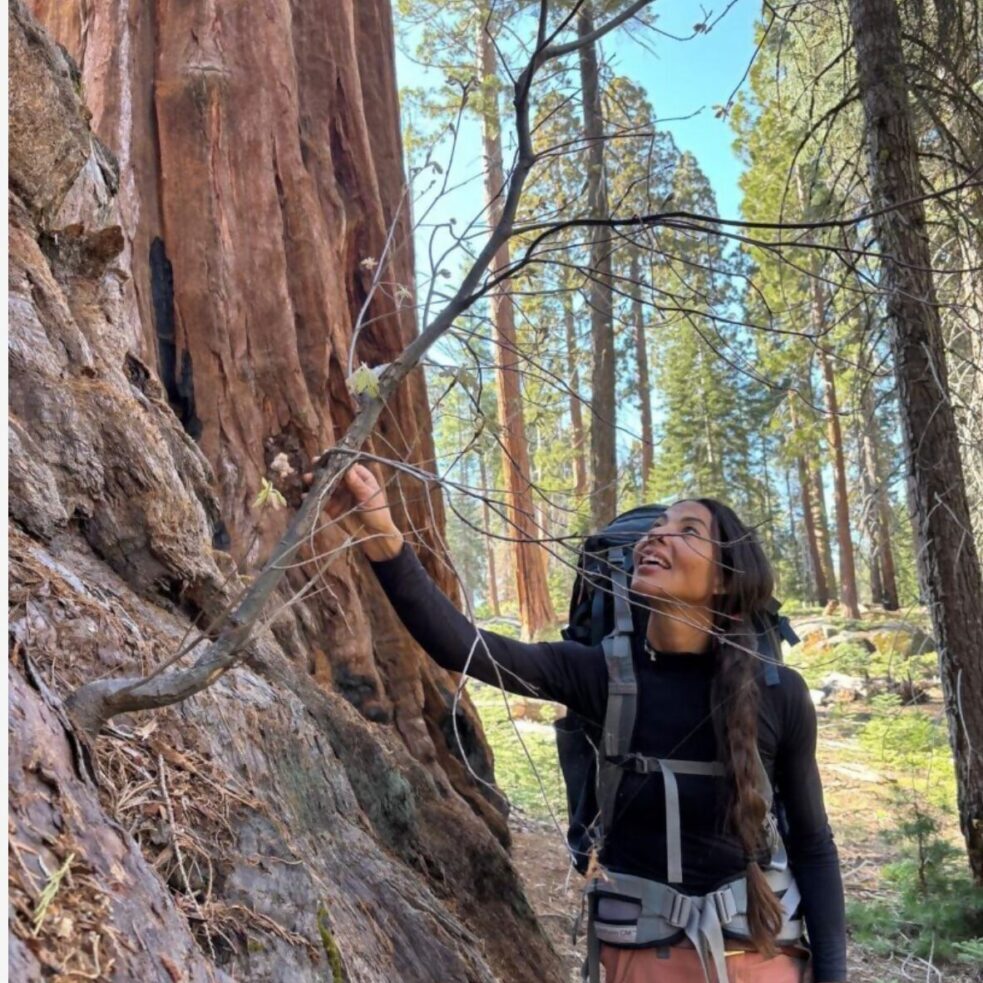
Climbing old-growth giant sequoias in California was a pivotal moment for me. Being with something that old, that tall and that big has an uncanny way of making you feel extremely small and young. And once you see trees that way, you can’t really unsee it.
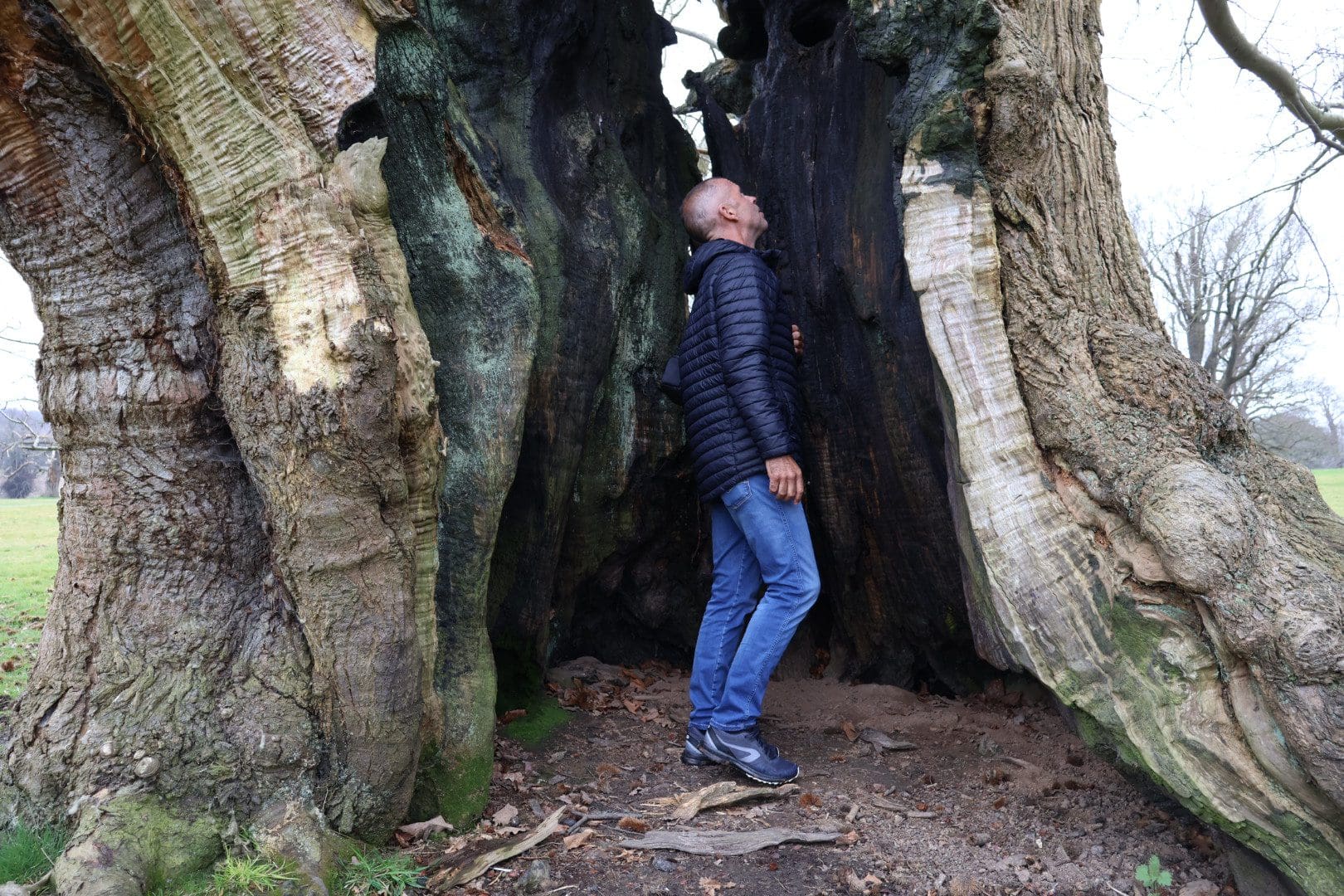
The more time I spent with trees in all the weather extremes, the more I started noticing them. Why had one branch failed while another survived? Why had this tree grown in such an odd way? How could an ancient tree be completely hollow, strong and still alive? When and why do trees seem to naturally shed limbs?
I started becoming curious about trees.
And I think that curiosity was the beginning of a relationship.
More than a walk in the woods
The programme grew from a very simple idea:
Relationships are built through repeated encounters.
We get to know people by spending time with them. We build trust through shared experiences, uncertainty, challenge, conversation and returning to one another over time. Why should our relationship with a place be so different?
Over six sessions, we use trees and woodland as a way of exploring curiosity, physical and emotional challenge, practical experience, connection with other people and eventually giving something back.
It isn’t therapy, and it isn’t a bushcraft course either. And we’re definitely not trying to turn everyone into arborists.
We’re simply using our experience to creat the conditions for people to experience trees differently — and perhaps themselves differently too.
How it works
Every programme is shaped around the people taking part and the green space we’re working in, but the journey follows five broad stages.
1. Connect
We start by looking.
And I mean really looking.
Why has that tree grown that way? Why is there a hole there? What happened to that branch? Why does one species behave completely differently from the tree beside it?
You don’t need to know anything about trees.
In fact, not knowing can be quite useful.
The idea is to replace judgement with attention — to stop seeing something as strange, damaged or wrong, and instead begin asking what happened here?
It’s a way of beginning to notice a landscape that many of us have spent our whole lives walking past.
2. Challenge
Then we change perspective — quite literally.
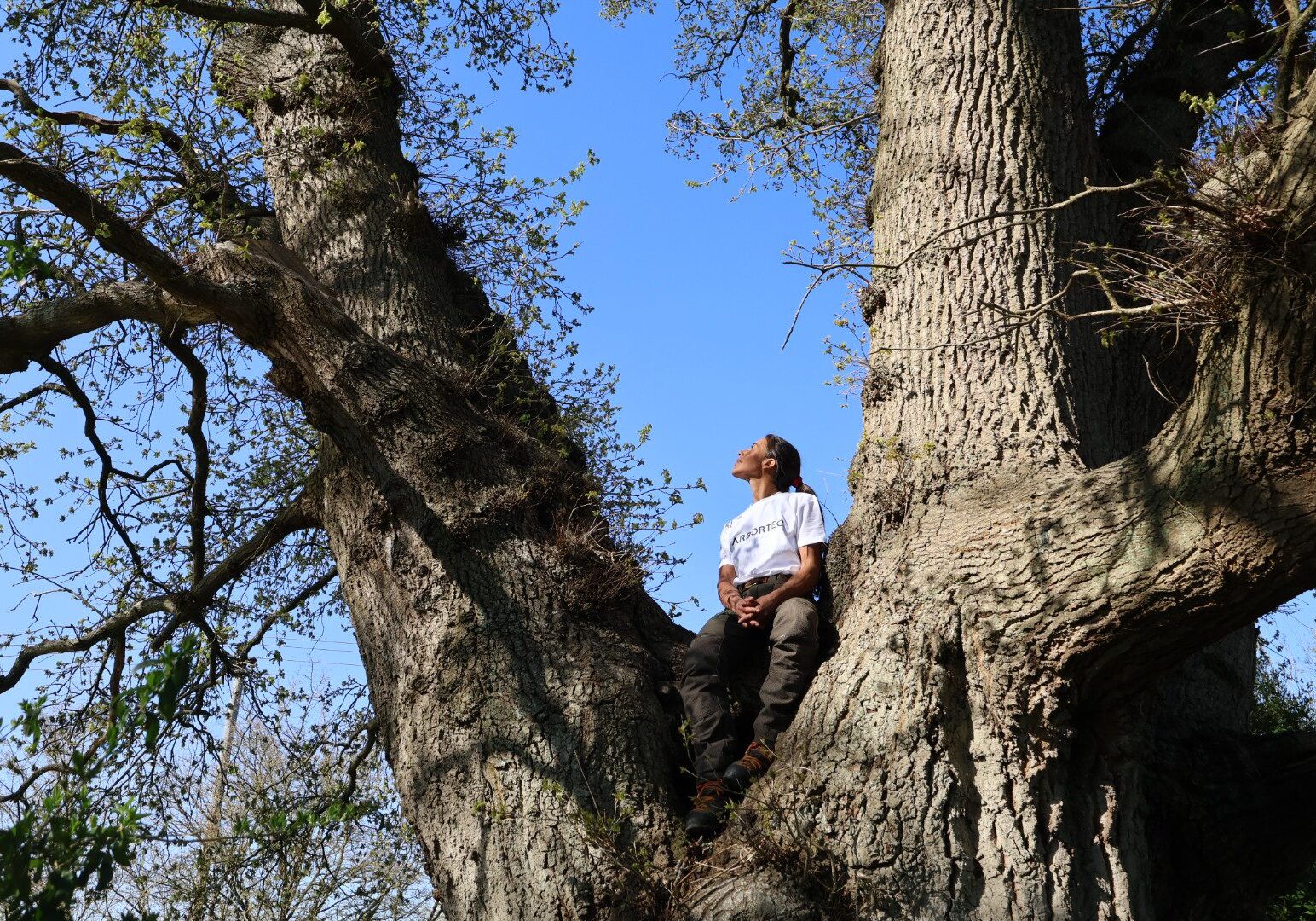
Tree climbing gives people the opportunity to experience a tree from somewhere completely unfamiliar: inside its canopy. There is obviously a physical challenge involved, but there can be an emotional one too.
Fear. Trust. Uncertainty. Asking for help. Helping someone else. Discovering that you can do something you were fairly convinced you couldn’t.
And because climbing requires concentration, there isn’t much room for thinking about twenty other things at the same time.
I think my relationship with trees has grown strong exactly because of challenge. Despite being physically strong, and sporty and an avid rock climber, I found tree climbing incredibly difficult — the rope management, the equipment, things getting tangled and learning to trust the kit and the tree. But everyday, through rain, wind, sun and storms, these things get fostered. Challenge in a controlled, dose-dependent way can be incredibly transformative, and I’m a big believer in the power of controlled challenge.
3. Live
This part is deliberately uncomplicated.
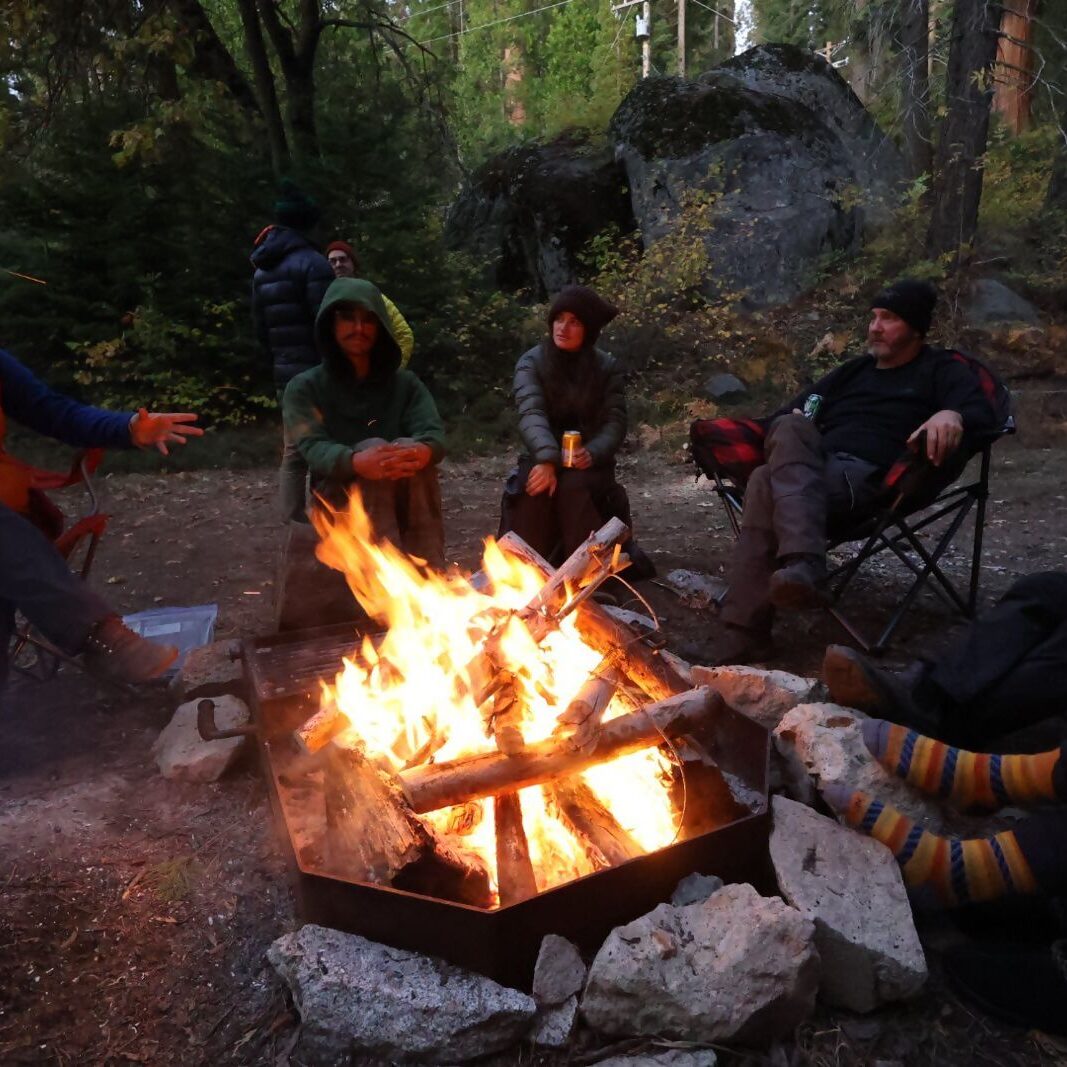
Phones are put away. We will build a fire together, forage food and prepare a meal together.
Preparing food outdoors. Sitting beneath trees. Talking. Doing things with our hands. Simple things like these are wonderful reminders of how little we need to be happy.
This phase isn’t about pretending we’re surviving in the wilderness, but it’s about stripping back all the unnecessary noise, and getting back to basics. It’s the part where we can remember what it feels like to stop passing through a place and spend some time actually being in it.
4. Care
Once we begin noticing somewhere, something interesting tends to happen.
We start caring what happens to it.
So this stage is about giving something back.
That might mean helping to remove invasive plants, planting or caring for young trees, clearing litter, improving habitat or carrying out another piece of practical woodland stewardship.
Instead of nature simply providing an experience for us, we become useful to the place too.
5. Belong
By the final stage, the woodland shouldn’t feel quite as anonymous as it did at the beginning.
There may be individual trees people recognize, and an understanding of why they look the way they do.
These places are associated with particular experiences. Things they’ve struggled with, laughed about or achieved together.
And perhaps that’s what belonging really is.
Not being told that somewhere belongs to you, but spending enough time there that you begin to care about returning.
Why trees?
Trees are very good at making us pay attention.
They work on completely different timescales to us. They adapt constantly to what is happening around them. They lose things, regrow things, conserve resources and find extraordinary ways of surviving.
Working with them has taught both myself and Al, a lot about patience, uncertainty and restraint.
Perhaps most importantly, they’ve taught us to observe before deciding something is a problem.
Sometimes the most useful question isn’t:
How do we fix this?
It’s simply:
Hmm. That’s interesting. Why has that happened?
That way of thinking has followed me far beyond the trees.
About us
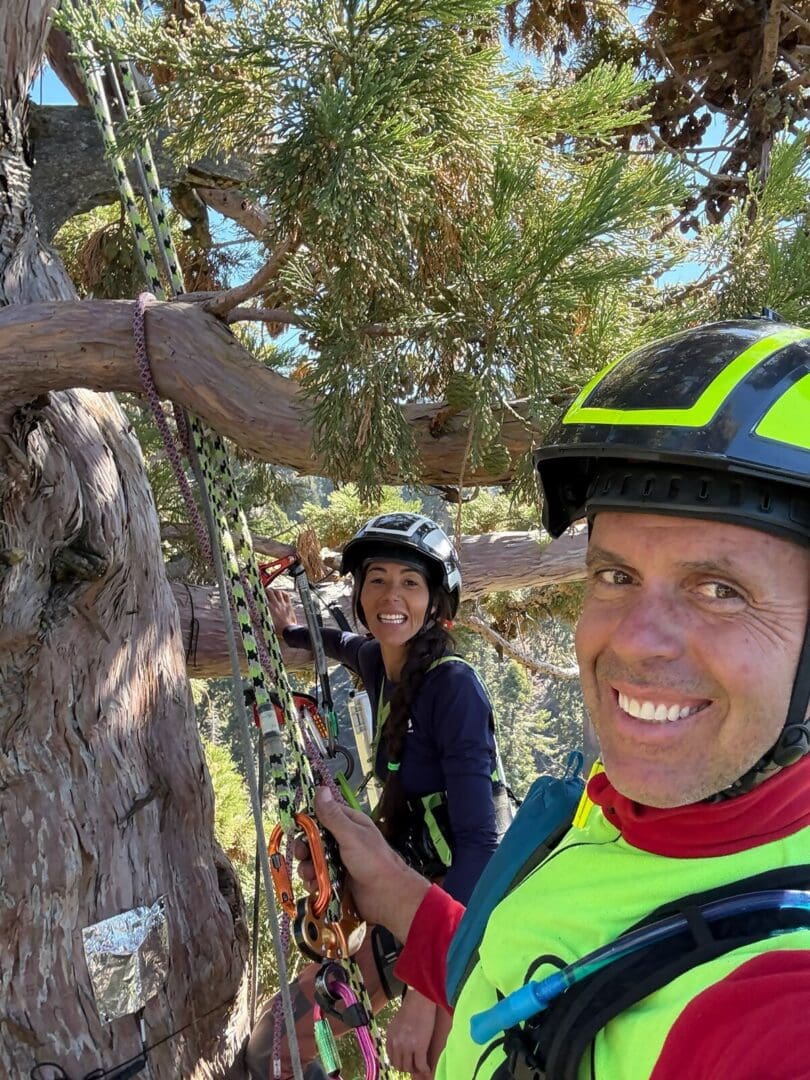
Girl in a Tree is run by me, Bianca, and my partner Al.
On paper, we came into arboriculture from completely different directions.
Al has worked with trees for over thirty years and brings an extraordinary depth of practical experience. I came into the profession much later, after a background in science, and have spent the last four years climbing professionally and becoming increasingly involved in canopy research, conservation and education.
Our skills are different, and that’s probably why we work so well together.
What we share is the belief that working with trees is about much more than carrying out work on them.
It begins with understanding them.
And increasingly, we want to find ways of opening up some of the incredible experiences we’ve been lucky enough to have in trees, to other people.
Who is it for?
The Woodland Connection can be adapted for different groups and organisations, particularly where confidence, connection, wellbeing, rehabilitation or simply having a completely different kind of shared experience could be valuable.
We are currently developing partnerships with organisations working in green health and wellbeing, social prescribing, rehabilitation and veteran support.
Groups are kept small so that the experience remains personal, supportive and genuinely hands-on.
Interested?
The programme is still developing, and that’s intentional.
We’d much rather build something around the people taking part and the woodland available than force everyone through exactly the same six sessions.
If you’re an organisation, healthcare professional, community group or landowner and think this could work for people you support, we’d love to have a conversation.
Come and talk to us about bringing people closer to trees — and perhaps seeing what grows from there.