Let’s start with a hard truth:
Pruning doesn’t calm trees — it stimulates them to grow. You can make a tree smaller for a while, but you can’t make it stay small.
This page isn’t about telling you what to do with your trees, but it’s an invitation to think a little differently about what tree care can realistically offer — and where its limits lie.
How to prune trees, whilst inflicting the least amount of damage is one of my ‘hard’ problems — it consumes almost every waking hour, because I feel a tremendous responsibility to trees. They give us so much, and working in a way that isn’t coercive and extractive is really important to me.
Sometimes, drastically different outlooks require seeing the problem differently, hence why this prose exists. Rather than me telling you how I work from a one-sided perspective, this is an invitation to you to think and work differently with me, so that together we can care for trees in a way that feels more honest, more thoughtful, and more sustainable for the future.
Modern arboriculture is an extremely young discipline in the timeline of our existence. It emerged in response to a new challenge: how trees, buildings, roads and people can coexist in increasingly crowded environments. A century ago, many of these pressures didn’t exist. Today, trees are often asked to adapt to conditions they were never designed for — and the science of how best to manage that is still evolving.
Because of this, we’re all still learning. Tree care isn’t a fixed rulebook. Trees don’t follow rules or laws — those are human constructs, but the most useful approach I’ve found is ongoing observation, and the humility to be wrong.
Trees are not passive objects
Trees respond to what happens to them. Light, gravity, wind, soil, neighbouring plants — all of it shapes how a tree grows. When trees are heavily reduced to make them “smaller”, they don’t become calm. They become busy. This is one of the central paradoxes of tree care: you can’t have both a smaller tree and a calmer one.
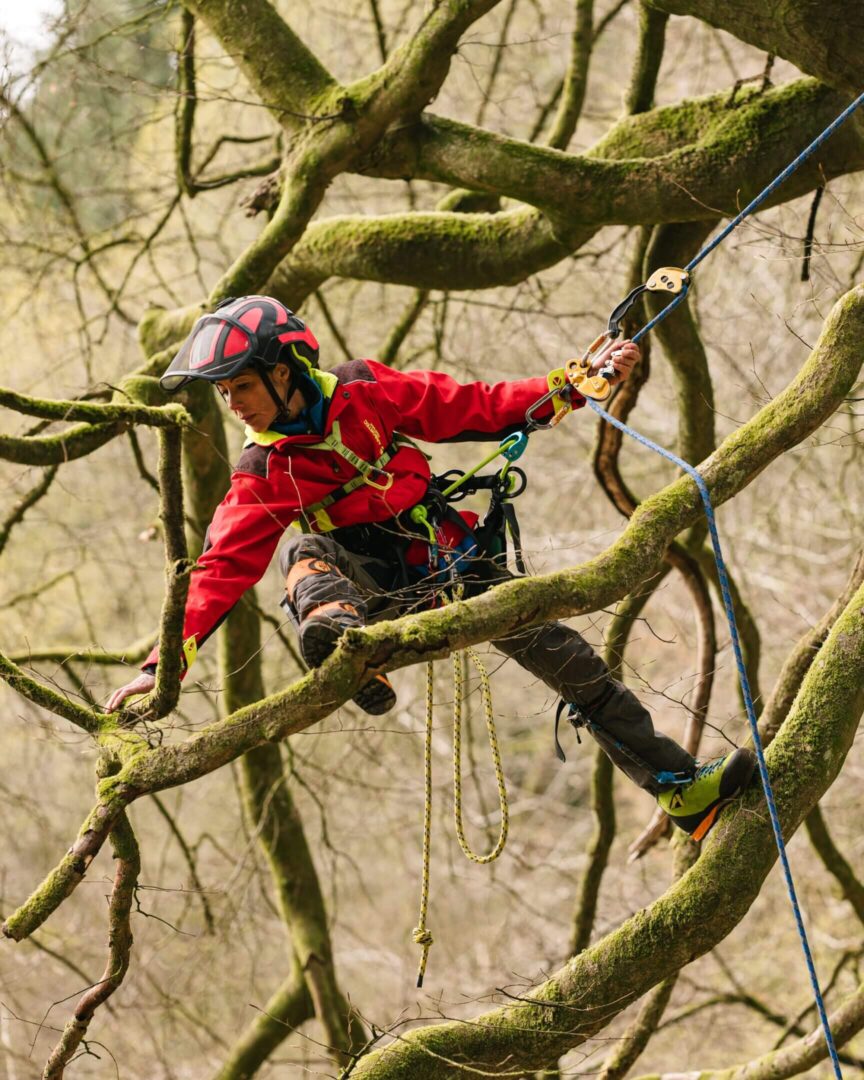
The more a tree is cut, the more it is stimulated to grow. This isn’t a flaw — it’s survival and the tree’s biological wiring for continuity. Large pruning wounds often trigger dense, reactive regrowth, and over time a cycle sets in: prune, regrow, prune again. Over time, both homeowner and tree become locked into an expensive, self-perpetuating cycle: prune, regrow, prune again.
Often, the problem isn’t the tree
In many domestic settings, the issue is simply the wrong tree in the wrong place for a variety of reasons. A 300-year-old oak tree for example, may not have had a house and a road to contend when it was seeded. A large tree close to a house will always feel intrusive. A full crown will always cast shade. A living organism will always respond to disturbance. No amount of careful pruning can turn a large tree into a permanently small one — only a stressed one.
But perhaps, we can start asking better questions. Instead of:
“How can I make this tree smaller?”
A more useful question could be:
“How can I live with this tree?”
That shift opens up different possibilities: redesigning space instead of repeatedly reducing the crown, choosing shade-tolerant planting, rethinking how gardens are used, and accepting seasonal change rather than constantly fighting it.
A more thoughtful approach
A regenerative approach to tree care doesn’t start with the chainsaw. It starts with understanding the space and the tree.
What species is this?
How large can it grow?
How has it been managed before?
What is it telling us about how ‘well’ it is?
What pressures is it responding to now?
What is the tree showing us it will become?
Sometimes the solution is less work, not more. Sometimes it’s longer intervals between intervention, or lighter, more precise pruning. Sometimes it’s no work. And sometimes it’s an honest conversation that says:
This tree will never behave the way you want it to — but there may be another way to live alongside it.
Choosing restraint
There is nothing wrong with wanting light, safety or space. But there are limits to what pruning can achieve, and costs — both human and ecological — to endless intervention.
Within those limits, better questions emerge. Not:
How do we keep this tree under control?
Choosing restraint. There is nothing wrong with wanting light, safety, or space. But there are limits to what pruning can achieve, and costs — both human and ecological — to endless intervention. Within those limits, better questions emerge. Not: How do we keep this tree under control? But: What kind of life does this tree allow here — and am I willing to live with that? Sometimes the most caring decision is to stop cutting. Sometimes it’s to redesign around what already exists. Sometimes it’s to let go — nature has a funny way of knowing better than we do. Tree care doesn’t always mean doing more. Sometimes it means doing less — with more clarity.
But:
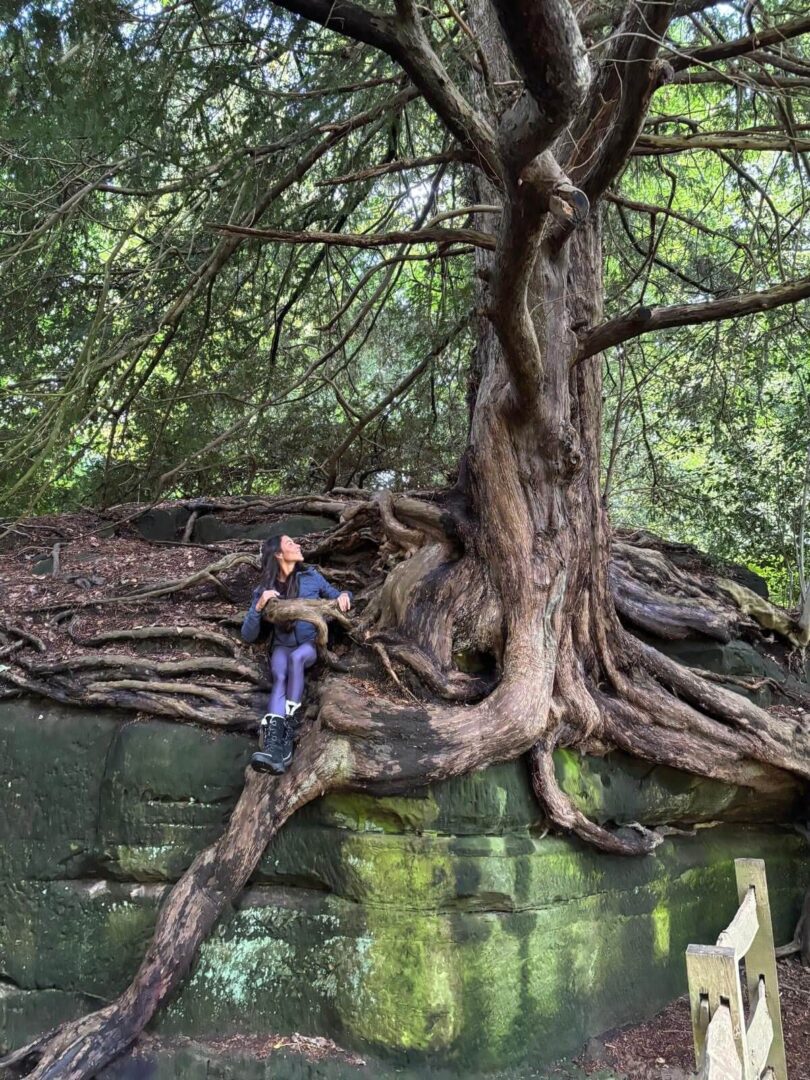
What kind of life does this tree allow here — and am I willing to live with that?
Sometimes the most caring decision is to stop cutting. Sometimes it’s to redesign around what already exists. Sometimes it’s to let go — nature has a funny way of knowing better than we do.
Tree care doesn’t always mean doing more.
Sometimes it means doing less — with more clarity.